Kidsgrove Athletic FC - a brief history


A club playing under the same name of Kidsgrove Athletic was in existence at the turn of the century. They played in the glorious pastures of Clough Hall, the residence of the Lord of the Manor. The surviving links are the name of the ground and, on the one and only photograph, ancestors of Ernie Langford, one of the club's directors. The Hall was demolished as the Great War loomed over Europe and the town lost its football status.

After the Second World War, football in the town was resurrected in the form of Kidsgrove United. Despite poor facilities, the team attracted players from a wide area, a situation that the local youth lobby found rather insulting and detrimental to football prowess and stature locally. So it came to pass that in 1952 a number of young men formed their own team and the name of Athletic was revived. Their first match brought a trophy - at cricket! The local knowledge of the track reaped rewards.

The club was officially formed at a meeting convened at the Blue Bell Inn, itself gaining national recognition for its fine ales, on December 3rd. Frank Timmis, a committee member today, was its first secretary. The local Mayor promised a £25 loan, with other expenses to be financed by tea dances. The club entered the established Burslem and Tunstall League and played on the Vickers and Goodwin pitch next to the A50 which is sadly now part of the sewage works.

Success was not forthcoming as internal wranglings over "imported" players from as far as five miles away threatened the club's structure, but people like Ernie Langford kept the club going. In 1960, on the present site, a farmer's field was converted into a pitch, and after a year out, the team achieved success by winning the second division title. The town itself was expanding rapidly as industry sprang up and people moved into the area to work in the pits and cokeworks. After capturing the Division One title , the club moved to the Staffordshire League (North) and quickly won both Divisions Two and One. The move up into the Mid-Cheshire League was not welcomed in some Staffordshire quarters.

Much success was enjoyed in the league with four championships and three cup wins, as well as lifting the Staffs FA Vase twice, the first club to do so. The clubhouse was built and altered over a number of years and finally, after three attempts, the club joined the North West Counties League in 1991. The installation of floodlights followed which enabled the club to join the newly-expanded Division One in 1992/3. Relegation was narrowly avoided that season, and was followed by several seasons of mid-table consolidation largely managed by Peter Ward.

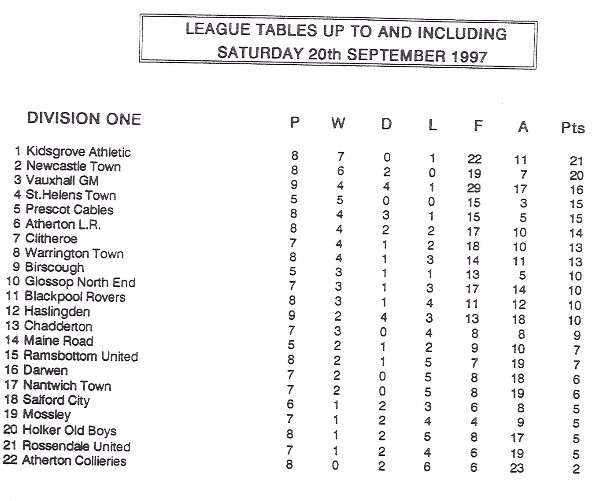
In 1997/98 the club had unparalleled success on the field winning the championship and League Challenge Cup and reaching the semi-finals of the FA Vase, where a 3-2 aggregate defeat by eventual winners Tiverton Town cost them a place at Wembley. Kidsgrove scored exactly 200 goals during the season. However, promotion to the UniBond league was stalled because of some development failings.

In the 2001/2 season, the club pulled out all the stops, with the help of chairman Terry Hillman, whose aim was to reach the UniBond within five years. This was achieved with two games to spare as Kidsgrove triumphed in a thrilling three-way title race with Prescot Cables and Salford City. The club's 50th anniversary season, and the first in the UniBond league was a struggle, with five managers coming and going over the course of the season. However, relegation was avoided by a good margin, with Kidsgrove eventually finishing 19th.

Hillman left his post as chairman in 2003/04 and the club struggled further, eventually finishing bottom of the league after a terrible run of results after Christmas. Consolation came in the form of no relegation due to restructuring, and a maiden Staffs Senior Cup win, beating Stafford Rangers in the final at Stoke City's Britannia Stadium.

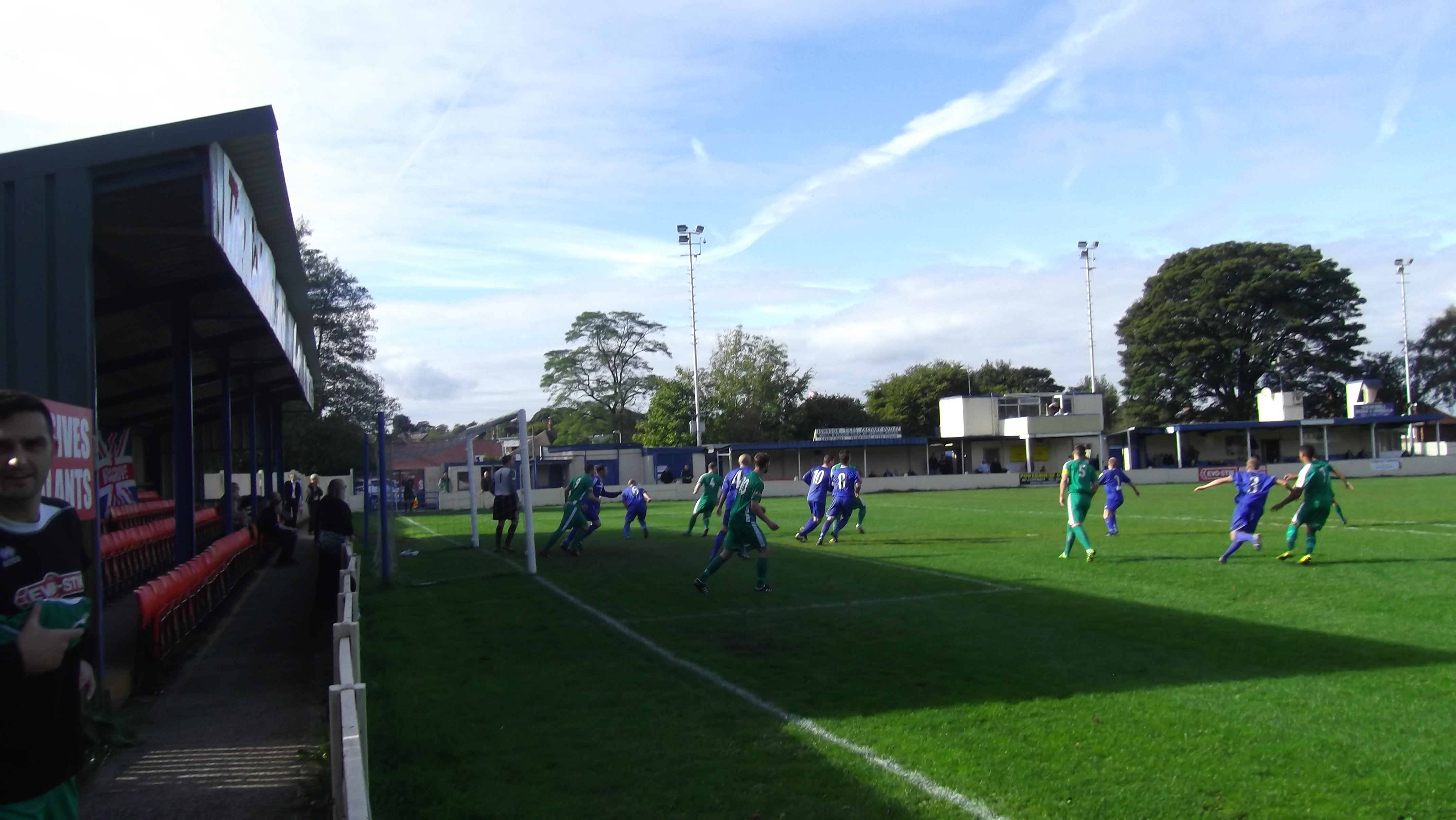
The club was forced to look more locally over the next two seasons under the management of Anthony Buckle and Darren Twigg, finishing 10th and 17th. The summer of 2006 saw great changes at Kidsgrove's ground, renamed the Stan Brown Stadium in honour of the chairman whose backing enabled the building of new stands and the increase of seating capacity up to 1,000. Peter Ward, who had previously managed the club during the NWCL days, returned as joint manager along with Paul Ogden. During 2006/07 Kidsgrove achieved their highest finishing position within the non league pyramid (7th in UniBond Division One) and won the Staffs Senior Cup for a second time with an emphatic 6-1 victory over Rushall Olympic in the final at Vale Park. The season will be best remembered for striker Michael Lennon's remarkable achievement of scoring 51 goals in his first year at UniBond level.

Ogden left his position in June 2007 and despite a sizeable wage budget, the following season was massively disappointing as Kidsgrove finished second from bottom in the league and chairman Stan Brown left the club. Financial restraints meant that the majority of the squad departed, leaving manager Peter Ward with a young, inexperienced squad with which to build for the future. After a difficult first half of the 2008/09 season, the players grew in confidence, recording a 15th place finish and regaining the Staffordshire Senior Cup after a dramatic penalty shoot out victory over Stafford Rangers. From this base, the club improved further during 2009/10 finishing 4th and securing a play-off place. The dream of promotion was not to be achieved, however, as Kidsgrove lost at Glapwell in the semi-final.

Hopes were high that Athletic would go one better during 2010/11, but after spending most of the season in the play-off positions, before fading badly in the final few weeks to finish seventh. Once more, though, the Staffordshire Senior Cup provided a highlight as Kidsgrove beat a Stoke City side to lift the trophy for a fourth time.